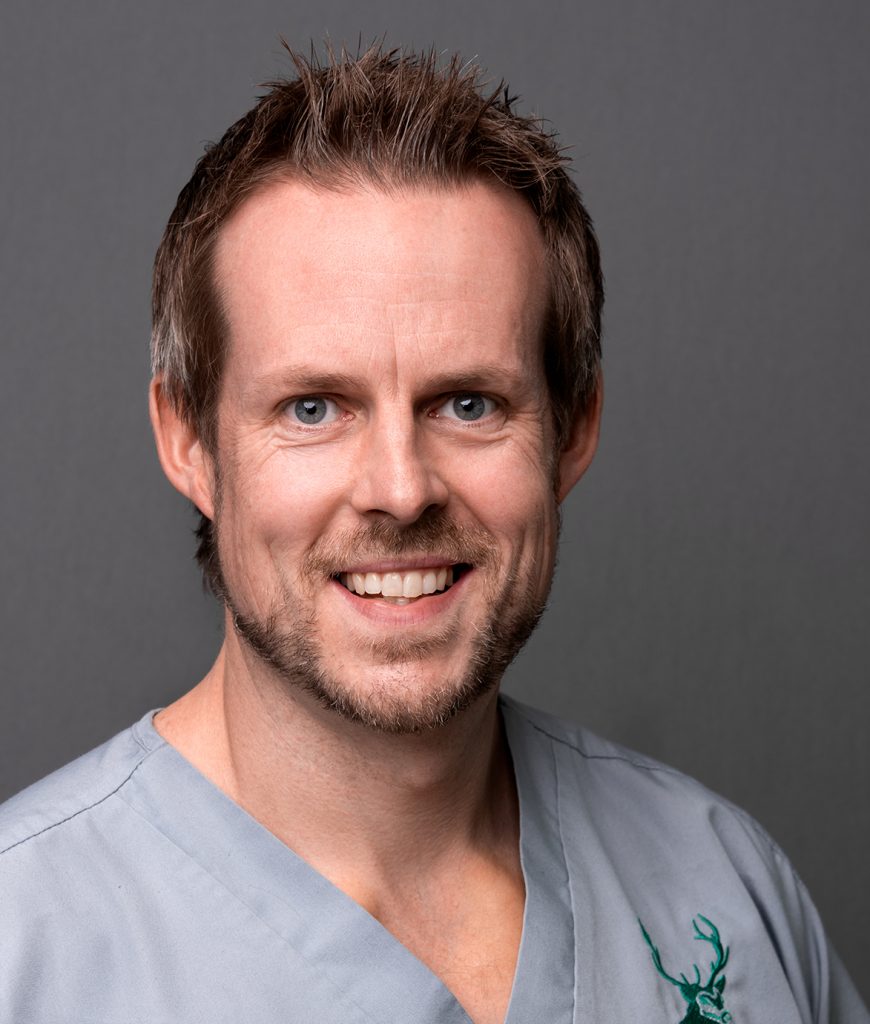

2022 has some great new ITI membership benefits in store. But what do our members like most about the ITI and why did they join us in the first place? To find out more, we asked one of our ITI Members, Simon Bate from UK. Read the interview to see how the ITI has helped him through the pandemic and made him a better surgeon.
Tell us a little about your career path so far
I qualified in Sheffield in 2006, completed my VT in Sheffield and then bought a small practice in a village in the North of England. I completed numerous courses in different aspects of dentistry focusing on cosmetic dentistry and orthodontics but never really found my passion. In the early years, implants did not appear on my radar as it seemed like too big a leap to go from simple extractions and minor oral surgery to placing implants. There is also a huge financial outlay and there is a terrible statistic where most people who train in implants do not go on to place any. It was a friend from my university days who convinced me to make the leap and so far I’ve never looked back.
What made you turn to the ITI and how did you hear about it?
I came across the ITI during the first COVID lockdown. I had put myself forward for some examinations in implant dentistry and I was struggling to find a structured learning syllabus to help my studies. Colin Campbell, who is one of my implant mentors, is a huge advocate of the ITI which is why I first went on the website to see what it is all about.
You joined the ITI in April 2020 early on during the global pandemic. How did membership help you during this difficult period?
As mentioned above, I was looking for a structured learning pathway for implant dentistry. As a digital member you get access to lots of information such as consensus statements and studies. However where I really struck gold was the access to hours of online lectures, assessments and previous congress lectures. I learn much better from a lecture than I do with sitting down and reading a textbook. The ITI provided me not only with everything I needed for the examination, but also a whole lecture series that could be accessed when face-to-face lectures were not allowed. As the lectures are all pre-recorded they can be accessed in bite-sized chunks whenever convenient.
What is your favorite “thing” so far?
So far it has to be the Congress. As an implant dentist you rarely work with other implant dentists and are often a visiting dentist at different practices. This can be a lonely place to be professionally. As the congress is all implant dentists, technicians, therapists and nurses you are really made to feel ‘part of something’ and less alone in the profession. The lectures were excellent and the Straumann party was fab.
You say that the ITI made you a better implant surgeon. Can you outline how?
A lot of the courses you attend are ‘how to do something with your hands’. This can sometimes miss the ‘why it works’. Sitting down and studying the science in a structured way firstly fills in any gaps that may have been missed in the hands-on courses, but also understanding the science helps you understand why things are done in a certain way and what you are trying to achieve at a biological level. Then your outcomes are improved. I would challenge anyone not to benefit from this.
Would you recommend the ITI to your colleagues and, if so, which aspects?
Yes. The aspects would depend on where you are at in your career. If you are new to the profession or studying for exams then the online learning is a must. If you are an experienced implant dentist, then the consensus statements for ensuring you are up to date and still evidence-based are very useful. Then for everybody I would whole heartedly recommend the Congress for updates, networking and as a reminder that you are part of something bigger.