Introduction
Dental implants have certainly gained a special place in dentistry. This treatment option has been in constant development since its earliest days, consolidating it as a well-validated therapy with established objectives. The success of dental implants and ultimately an improvement in patients’ quality of life (Duong et al., 2022) can be linked to advancements in prosthesis retention and stability. As clinicians, it may be natural for us to consider dental implants as the first option when replacing teeth. However, we must bear in mind that patients may not always share this rationale. This perspective aligns with discussions advocating for an approach where emotional aspects are recognized, ensuring the patient feels heard and understood (Fakheran, 2023; Nassehi & Fakheran, 2025).
From treating diseases to patient-centered care
Clinical reality may be perceived differently by patients and doctors; lack of compliance and understanding by one or both parties can lead to inappropriate or poor clinical management and outcomes (Kleinman et al., 1978). Doctors treat the disease while patients experience the illness. In line with this distinction, clinicians focus on the abnormalities or malfunctions of the body and patients experience said changes at emotional, psychological and social levels (Eisenberg, 1977). This is where patient-centered care comes into play.
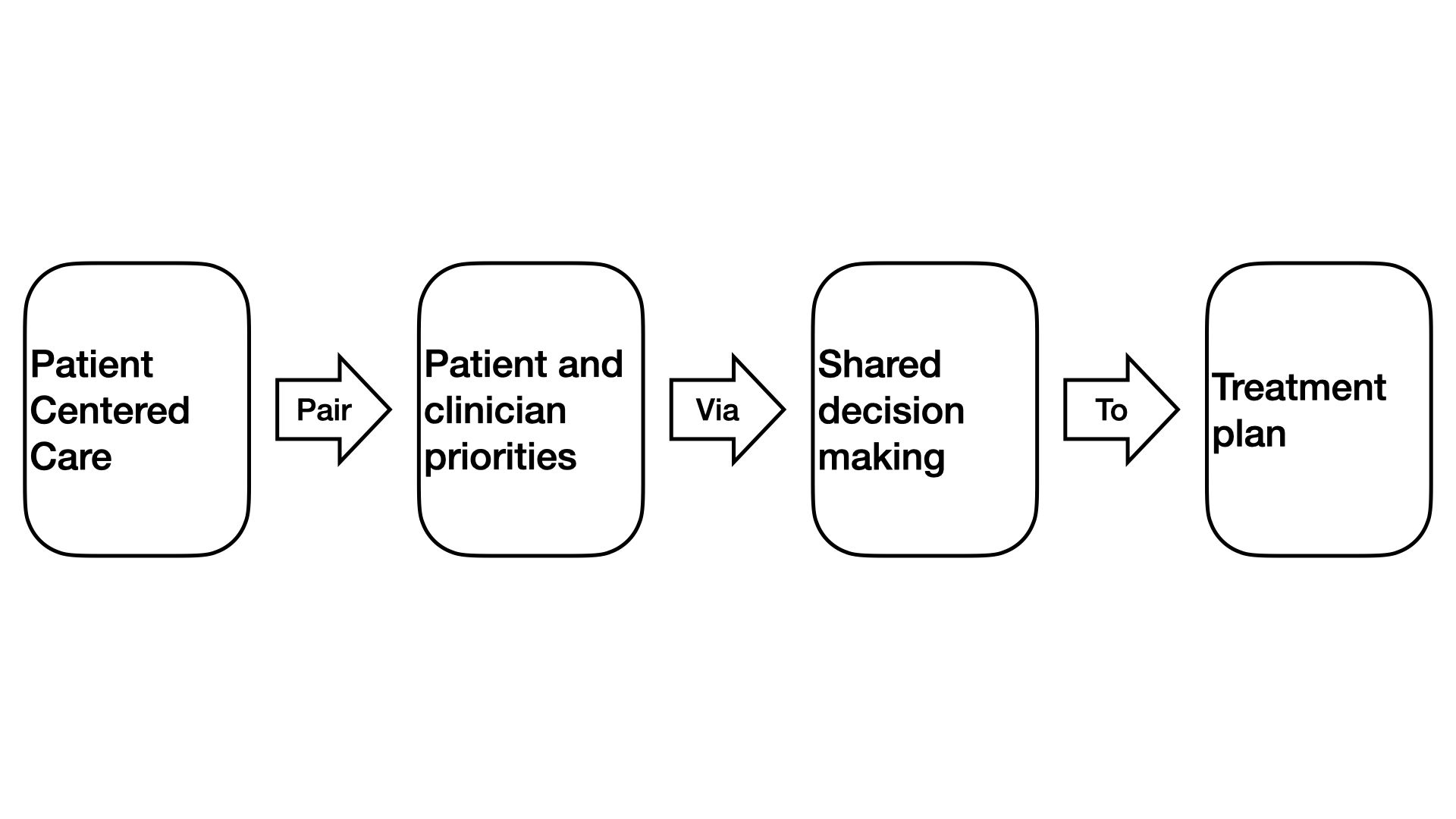
Patient-centered care focuses on respecting the patient’s needs, values and preferences, ensuring that they guide clinical decisions. Communication and coordination between the parties involved, physical care, emotional support, involvement of the patient’s personal circle are additional elements to consider when adopting this framework of care (Gerteis et al., 1993). As stated by Bardes (2012), in the patient-centered care model no one takes the central role, instead both doctor and patient work together towards a mutual goal and recognize in each other the different values, needs, experience and knowledge to this end. It is an approach that acknowledges and incorporates the patient’s biopsychosocial features for treatment purposes. This model has numerous advantages: on the one hand patients experience improved outcomes, enhanced satisfaction and health status along with reduced use of care, while, on the other, professionals benefit from reduced litigation and greater work satisfaction (Böhme Kristensen et al., 2023).
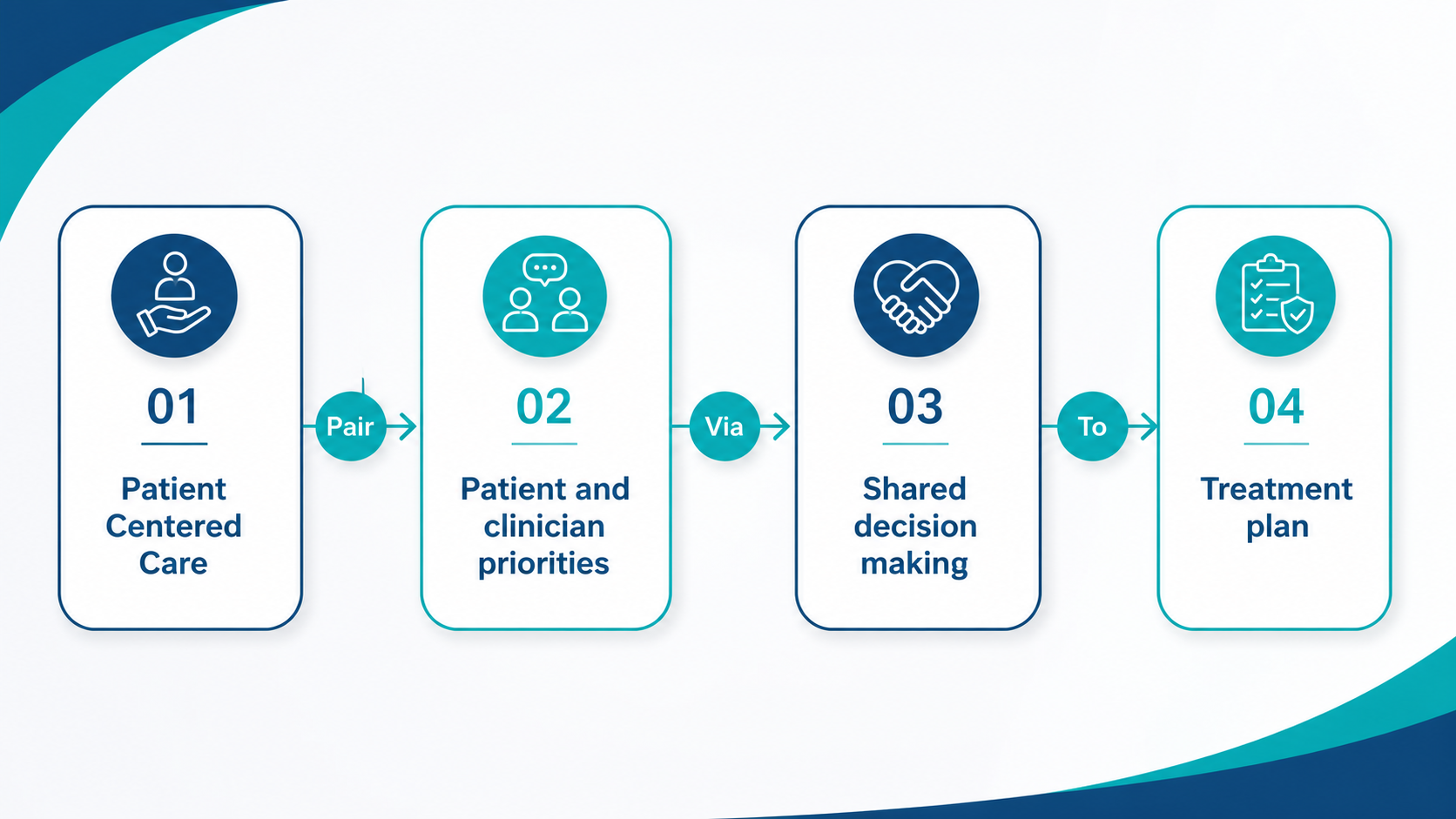
The foundation of patient-centered care is the shared decision-making process, defined as “a collaborative process that involves a person and their healthcare professional working together to reach a joint decision about their care”. It is important to elucidate that this process is not about leaving the patient to decide alone or doing whatever he or she wants, neither is it about convincing the patient to follow the clinician’s advice without any consideration (Légaré & Thompson-Leduc, 2014). There are two core elements to this: risk communication and value clarification, the first being the assessment of benefits and risks of the intervention and the latter recognizing what is most important to the patient and his or her family (Grad et al. 2017).
Integrating the patient-centered approach to implant dentistry
Due to the advantages mentioned above, patients and clinicians seek to use this treatment modality whenever possible. Dental implants have experienced remarkable growth over the years, and this trend is expected to continue. Elani et al. (2018) found that the prevalence of dental implants among the adult population in the US increased from 0.7% in 1999-2000 to 5.7% in 2015-2016 with projections suggesting it could reach 23% by 2026. With the ongoing expansion and the associated high costs, it is important to examine how patients and clinicians conclude that dental implants are the right solution, especially given that most studies explore the clinical aspects of decision-making, leaving out the social aspects even if they play a significant role in the process (Alzahrani & Gibson, 2018).
Patients’ motivations for dental implants relate mainly to appearance and function, referencing a distorted self-image, fear of people noticing missing teeth, or the inability to eat or speak properly even with dentures (Grey et al., 2013). Just as there are reasons for patients to consider dental implants, there are reason for the opposite. A compelling study about the refusal of dental implants in a population dissatisfied with their current removable complete denture revealed pain, potential complications, healing outcomes and age as some causes to turn down dental implants, even if the stability of the prostheses and associated quality of life were expected to improve. Strikingly, economic factors and information about dental implants did not play a role in refusing this option (Ellis et al. 2011).
This shows how powerful psychological and social factors can be when selecting a treatment. Integrating these dimensions with clinical realities, such as disease and illness, highlights that it is sometimes not a case of feasibility but whether the patient considers the implants appropriate to their individual situation. The ability to incorporate biopsychosocial elements is what makes patient-centered care worth adopting. It allows the patient´s specific situation to be addressed with a strategy to comply with the clinical standards while also helping patients feel more comfortable.
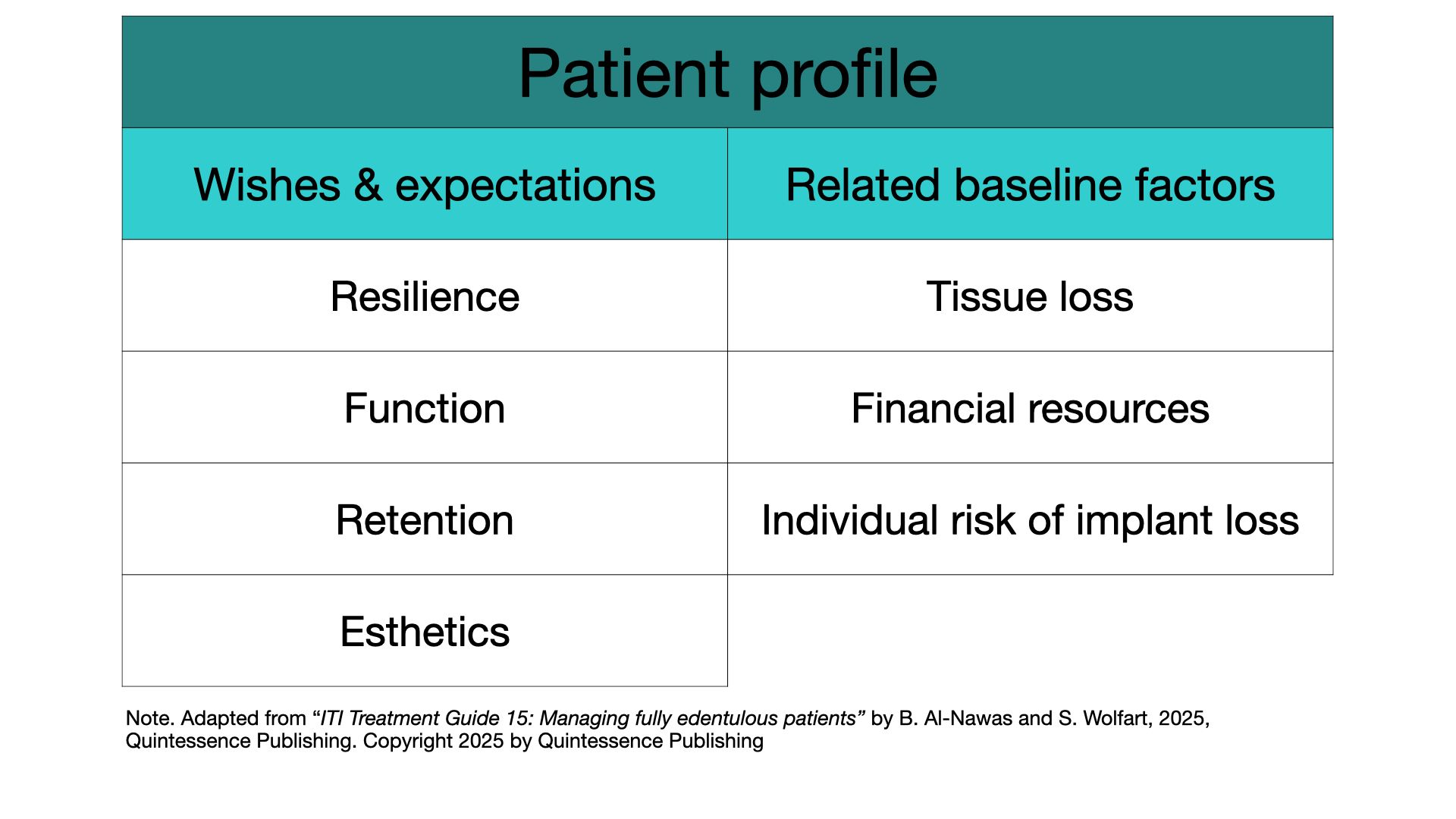
Efforts to implement this framework are being made as seen, for instance, in the 15th ITI Treatment Guide on managing fully edentulous patients. Al-Nawas and Wolfart (2025) contribute with the “patient profile” concept, which encompasses patient’s wishes, expectations and baseline factors as shown in table 1. These parameters help to identify treatment options according to the patient’s situation. Another example for this effort is the 1st Global Consensus for Clinical Guidelines, where the goal was to formulate clinical recommendations for the treatment of the edentulous maxilla integrating clinical parameters with patient concerns, culminating in 36 recommendations ranging from patient selection to maintenance and long-term follow up (Schwarz et al., 2026).
Conclusion
By incorporating a patient-centered care model that features a shared decision-making process throughout a transparent and empathetic dialogue—one that addresses both the biological status (disease) and the patient’s personal concerns (illness), parties understand each other better, thereby increasing satisfaction and reducing the odds of unpleasant experiences. There will be clinical scenarios where a treatment option may appear objectively superior, but patient preferences must remain at the core of the clinical process. This is especially true when the chosen path significantly impacts a person’s life, such as with an edentulous patient. Ultimately, success in implant dentistry is not merely achieving osseointegration, but ensuring that the clinical outcome aligns with the patient’s values and quality of life. That is, in essence, what patient-centered care is all about.